|
EXPECTED PROGENCY DIFFERENCES (EPDs)
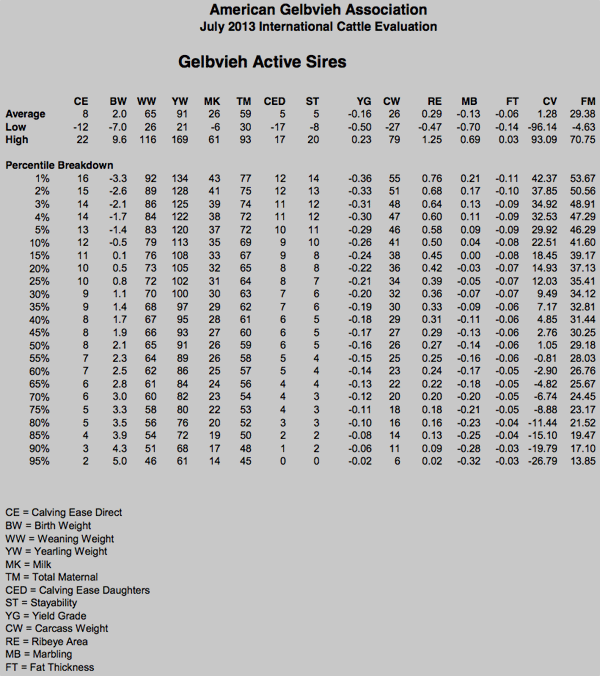
During the past ten years the use of Expected Progeny Differences (EPDs) by both seedstock producers and commercial cattlemen has increased markedly. In fact, 90 percent of the commercial cattlemen that responded to a recent AGA survey said they used EPDs when selecting Gelbvieh bulls. EPDs have proven to be very valuable for discerning within breed differences.
EPDs may be used to estimate how future progeny of any particular animal will compare to progeny of other animals within the breed. These values are calculated on the basis of a complicated formula that balances input of parental and progency data, combined with actual measurements on a particular animal for whom the EPD is being estimated. The key words are estimate, future, compare and within breed. EPDs are not designed to predict the performance of one or two progeny of a sire, but rather should be used to compare bulls based on estimated progeny performance. EPDs predict differences, not absolutes.
EPDs are reported in pounds for all traits except calving ease, which is given as a ratio (100 being average), gestation length reported in days, scrotal circumference in centimeters, ribeye area in square inches, marbling in degrees of marbling score, and fat thickness in inches. Higher calving ease EPDs correspond to less calving difficulty. Maternal calving ease relates to the ability of daughters to calve. Larger gestation length EPDs equal longer gestation of progeny sired by the subject bull. Milk EPD reflects differences in the weaning weights of progeny of daughters as affected by milk production of the daughters.
The American Gelbvieh Association's (AGA) January 2013 EPDs are based on a new collaborative national cattle evaluation (NCE) with the American Simmental Association (ASA). Here are a few highlights of the changes:
- EPDs for Gelbvieh, Balancer®, Simmental, SimAngus, and Red Angus can be directly compared to one another
- Calving Ease and Calving Ease Daughters EPDs reflected as percentages of unassisted births
- True multi-breed EPDs provide more complete Balancer EPDs
- Growth traits are more reliable with wider age window for weaning weight
- Carcass traits are standardized to an age-adjusted endpoint like the rest of the industry
Research EPDs
The American Gelbvieh Association's Impacting the Beef BusinessTM long-range strategic plan calls for the development of reliable tools to "Own maternal efficiency and stay between the guardrails for all other traits." This includes the creation of additional EPDs and indexes for traits such as maternal efficiency, feed efficiency, and carcass merit.
|